

The Cold Chain: The Complete Guide to Cold Chain Management
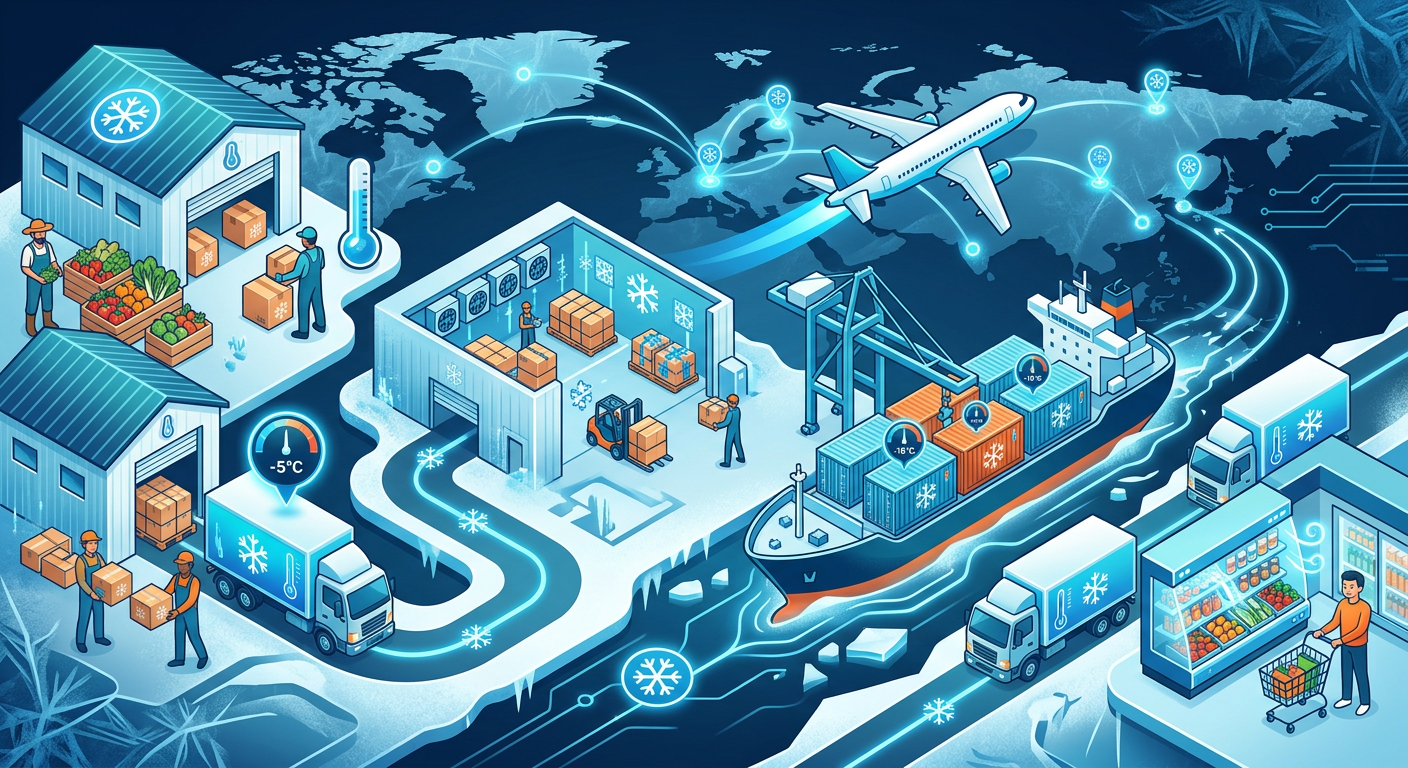
In modern logistics, the cold chain is essential for ensuring the safety and integrity of temperature-sensitive products. This article explores in depth what the cold chain is, how it works, the technologies involved, and why it is crucial in sectors such as pharmaceuticals and food. You will also discover best practices for managing it effectively, ensuring that products reach their destination in optimal conditions.
What Is the Cold Chain?
The cold chain is a temperature management system designed to keep products at controlled temperatures during transportation and storage. This chain ensures that temperature-sensitive products such as medicines, vaccines, and fresh food are not exposed to temperature fluctuations that could compromise their quality or safety. Maintaining the ideal temperature is essential to prevent deterioration and ensure that consumers receive safe and effective products.
The Importance of the Cold Chain in Key Sectors
In key sectors such as pharmaceuticals, the cold chain is vital for the transportation of vaccines and temperature-sensitive medicines. Any disruption in the cold chain can lead to significant losses, not only in economic terms but also in terms of treatment opportunities for patients. Similarly, in the food industry, proper temperature management helps prevent foodborne illnesses and ensures the freshness and quality of products.
Cold Chain in the Pharmaceutical Sector
Managing the pharmaceutical cold chain requires strict temperature controls and continuous monitoring throughout the entire product lifecycle. Companies must implement specific strategies for every stage, from production and distribution to final administration to the patient. Modern technologies such as GPS tracking systems and IoT sensors are revolutionizing the way environmental conditions are monitored.
Cold Chain in the Food Industry
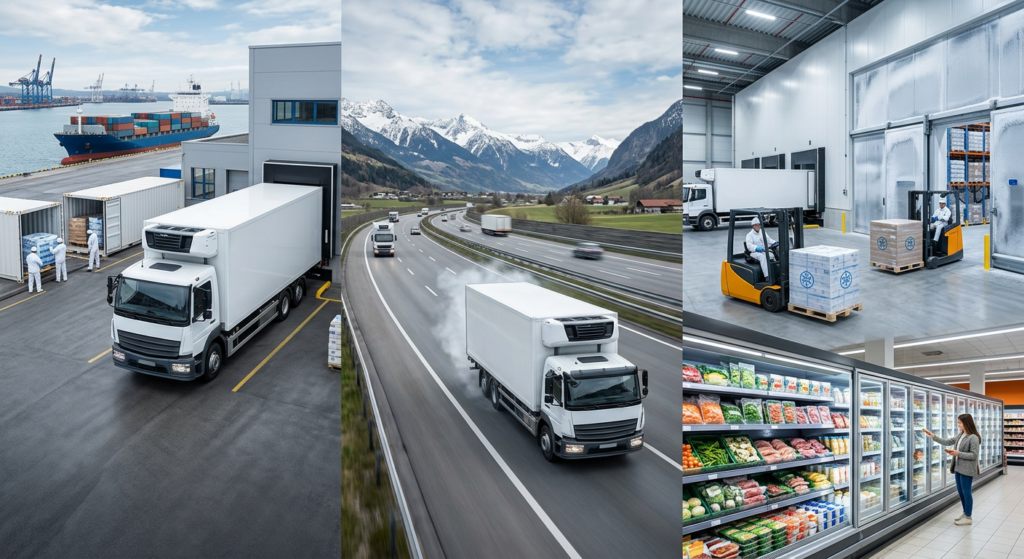
In the food industry, maintaining an efficient cold chain is crucial for preserving the quality of perishable foods. From collection and production through to distribution and retail, every stage must be carefully controlled. The use of refrigerated vehicles and temperature-controlled warehouses is essential to ensure that food products maintain their quality standards until the point of sale.
Cold Chain in Transport and Logistics
Temperature-controlled transportation is one of the most sensitive links in the cold chain. When transporting food products, pharmaceuticals, and other temperature-sensitive materials, it is essential to maintain appropriate temperature conditions and minimize fluctuations as much as possible during loading and unloading operations.
Refrigerated warehouses, logistics platforms, and handling areas must also be designed to support cold-chain continuity. Effective flow management, adequate insulation, and dedicated solutions for doors, passageways, and surfaces all contribute to making product handling more efficient and safer.
Cold Chain in Distribution and Food Service
The cold chain also continues through the distribution and food-service stages. Supermarkets, distribution centers, restaurants, catering facilities, and canteens must maintain appropriate conditions for food storage until the point of sale or consumption.
In these environments, refrigerators, cold rooms, refrigerated counters, and storage areas must be easy to clean and properly organized to reduce the risk of contamination and ensure correct product management.
Technologies Used in the Cold Chain
Several technologies play a key role in the effective management of the cold chain. These include:
- Monitoring Systems: Advanced sensors that record temperatures in real time, allowing immediate action in the event of deviations.
- Insulated Packaging: Innovative solutions that help maintain the desired temperatures during transportation.
- Supply Chain Management Software: Tools that optimize logistics planning and improve operational efficiency.
Hygienic Profiles and PVC Panels for Refrigerated Environments
Cold-chain management is not only about temperature control, but also about the design and maintenance of the environments where products are stored and handled. Cold rooms, refrigerated areas, and temperature-controlled facilities must provide suitable conditions not only in terms of temperature, but also hygiene, cleanliness, and surface protection.
In this context, hygienic profiles are an important element in the design of these environments. Used at wall-to-floor junctions and where different surfaces meet, they help eliminate difficult-to-clean corners and reduce areas where dirt and residue can accumulate. This makes cleaning and sanitization easier, which is particularly important in food-processing and pharmaceutical environments.
PVC panels can also play a role in protecting and organizing cold-chain environments. Used as wall coverings or partitioning elements, they provide durable, washable, and easy-to-maintain surfaces, helping protect structures and keep environments functional over time.
Integrating hygienic profiles and PVC panels with other solutions specifically designed for refrigerated environments therefore allows for a more comprehensive approach to cold-chain management: not only controlling temperature, but also creating hygienic, protected, easy-to-clean environments designed for efficient maintenance.
Best Practices for Managing the Cold Chain
Implementing an effective cold chain requires attention to detail and well-defined strategies. Here are some best practices to consider:
- Careful Planning: Analyze the logistics route to identify potential temperature-related risks.
- Staff Training: Educating operators on proper cold-chain management is essential to prevent human error.
- Adopting the Right Technologies: Invest in technological solutions that improve temperature monitoring throughout the entire supply chain.